

The equipment demands high standards for temperature stability,uniform heat dissipation,and structural precision.Standard heat sink designs often suffer from uneven cooling,excessive airflow resistance,localized heat accumulation,and issues like deformation or resonance,all of which compromise component operational accuracy and service life.Optimizing the heat sink structure requires a multi-dimensional,refined design approach—considering operating conditions,spatial constraints,thermal control standards,and noise requirements—to simultaneously achieve optimal thermal performance and structural stability.
Optimizing the heat sink baseplate is fundamental to thermal design.The baseplate is responsible for interfacing with the heat source and conducting heat;uneven thickness,poor flatness,or excessive interface gaps directly lead to increased thermal resistance and delayed heat conduction.Design optimization must ensure high baseplate flatness and strict control of machining tolerances to minimize contact thermal resistance between the heat source and the baseplate.For areas with high heat flux density,solutions such as thickened baseplates,embedded heat pipes,or vapor chambers can be employed to enhance local thermal conductivity and prevent localized heat buildup.Additionally,the design must align with heat source locations to ensure full-coverage contact over critical heat-generating zones.
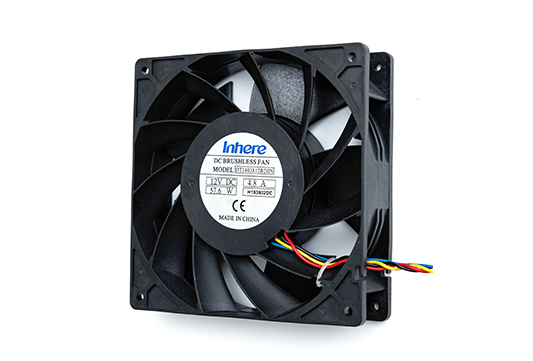
Optimizing fin structures can effectively improve convective heat transfer efficiency.Traditional straight fins with uniform spacing often suffer from high airflow resistance and low utilization of heat transfer surface area.Thermal performance can be enhanced by optimizing fin spacing,height,thickness,and arrangement:widening fin spacing reduces dust accumulation and airflow resistance,making the design suitable for low-airflow equipment;using a zoned arrangement—with denser fin placement in areas corresponding to heat sources—intensifies cooling;and refining fin edge geometry reduces noise caused by airflow turbulence,meeting equipment noise-reduction requirements.In certain applications,corrugated or folded fin structures may be used to increase the effective heat transfer surface area.
Optimizing airflow paths and the overall layout addresses issues regarding"dead zones"in heat dissipation.Given the compact internal space of the equipment,heat sinks are prone to airflow path obstruction and airflow short-circuiting.Design efforts must integrate with the overall equipment structure to ensure unobstructed airflow paths—avoiding blockages caused by the housing,wiring harnesses,or other components—and optimize the heatsink's mounting angle and position to separate cold and hot airflows,thereby preventing heat recirculation and secondary heat accumulation.For enclosed equipment,airflow-directing structures should be incorporated to regulate airflow patterns and maximize convective cooling efficiency.
Lightweight design and structural stability must be optimized to suit the equipment's specific characteristics.Since equipment designs often prioritize low weight and minimal deformation,heavy heatsinks can impose excessive loads and trigger resonant vibrations.Optimization strategies include using lightweight aluminum alloys with high thermal conductivity to eliminate redundant material while maintaining cooling performance,and enhancing the heatsink's overall rigidity to prevent fin deformation or baseplate warping caused by prolonged vibration.Additionally,surface treatments such as passivation and oxidation should be applied to improve corrosion and oxidation resistance,ensuring long-term thermal stability.
By optimizing baseplate thermal conductivity,upgrading fin heat-exchange capabilities,planning airflow layouts,and strictly controlling structural precision,it is possible to create a high-performance heatsink structure tailored to the equipment.This effectively resolves issues such as unstable temperature control and heat-accumulation-induced aging,ensuring the equipment operates with high precision and long-term stability.
