

As the power density of industrial,new energy,and precision control equipment continues to rise,traditional passive cooling solutions struggle to meet the demands of high-power operation.Issues such as localized heat accumulation,uneven temperatures,thermal throttling,and accelerated component aging occur frequently;consequently,a scientifically sound thermal management design has become critical to ensuring equipment stability and extending the system's lifespan.Optimizing thermal management for high-power equipment is not merely a matter of stacking cooling structures;rather,it requires a systematic design approach encompassing heat source analysis,structural layout,cooling solution matching,and integrated temperature control.
The initial phase of thermal management design requires precise heat source breakdown and thermal simulation analysis.High-power equipment is typically characterized by concentrated heat sources and high heat flux density;without proper zoning of heat sources,heat accumulation is likely to occur.Thermal simulations modeling various operating conditions—such as full-load,peak,and intermittent operation—accurately identify core heat-generating zones,specific temperature points,and"dead zones"where heat accumulates,providing the data needed for subsequent structural layout planning.Simultaneously,factors such as enclosure sealing,installation environment,and ventilation conditions are evaluated to determine the suitability of various cooling methods—such as natural cooling,forced convection,or liquid cooling—thereby avoiding design redundancy or insufficient cooling.
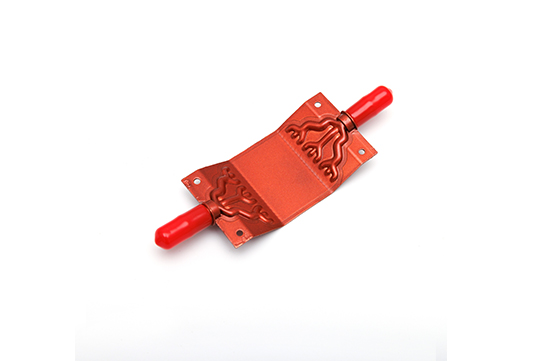
Structural layout optimization forms the foundation of thermal management design.Adhering to principles such as"dispersing heat sources,""zoning hot and cold areas,"and"ensuring unobstructed airflow,"designers distribute high-power components to prevent localized heat concentration.High-temperature and low-temperature zones are separated to eliminate interference between hot and cold airflows that could cause heat stagnation,while sufficient airflow channels and heat exchange spaces are reserved to prevent the enclosure or structural components from obstructing ventilation paths.For sealed high-power equipment,internal heat exchange channels must be established,utilizing thermally conductive and heat-spreading structures to facilitate rapid heat transfer and resolve issues with trapped internal heat.
Matching the cooling solution to the specific requirements is the core of the optimization process.For low-to-medium power devices,passive and active cooling structures—such as heat sinks,cooling fans,and thermal pads—can be optimized to enhance convective heat transfer efficiency.Conversely,for high-power,high-density integrated devices,composite thermal management solutions utilizing liquid cooling,phase-change energy storage,and vapor chambers are required to overcome the heat transfer limitations inherent in air cooling.A tiered approach ensures temperature control standards are met under high-temperature conditions while avoiding the wasted space and increased energy consumption associated with over-engineering.
Intelligent,coordinated thermal control optimization can further enhance the precision of thermal management.Traditional cooling systems often operate at constant power,resulting in high energy consumption and poor temperature control accuracy.Optimized designs can incorporate intelligent thermal control systems that dynamically adjust fan speeds,liquid coolant flow rates,and heat exchange power based on real-time device temperature and operational load.This enables an adaptive control mode—minimizing energy use at lower temperatures and maximizing heat dissipation at higher temperatures—thereby effectively reducing overall system energy consumption while maintaining stable operating temperatures.
In summary,optimizing thermal management for high-power devices requires a multidimensional approach that integrates simulation data,structural design,component selection,and intelligent control.Scientific thermal management design effectively addresses issues such as heat accumulation,high-temperature malfunctions,and performance degradation,ultimately enhancing the operational stability and service life of high-power devices.
